
Guides · August 2026 · 2 min read
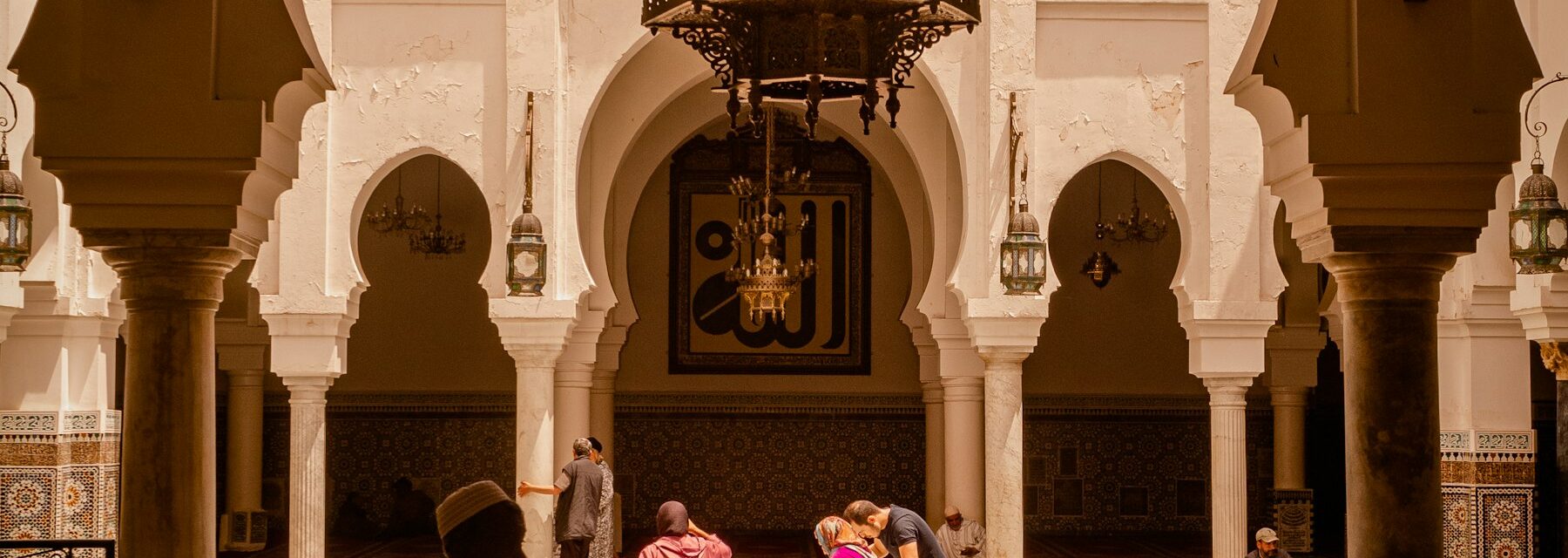
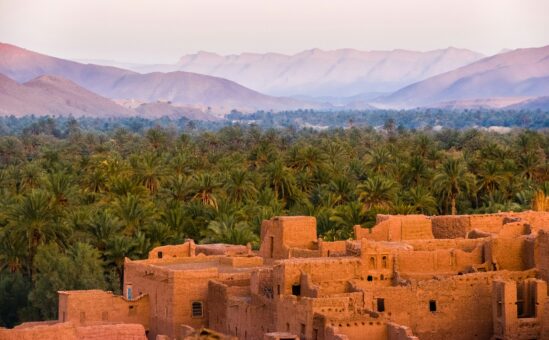
How to behave in a room where music is happening.
Ten small things that make the difference between being a guest and being an audience. None of them are about music.
Playlists · November 2025 · 2 min read
Not a canon and not a best-of. Ten records that between them map what you are likely to hear, and why each one is on the list.
This is not a canon. It is ten records that between them cover most of what a traveller is likely to encounter, chosen partly for what they are and partly for how well they prepare an ear that has not heard any of this before.
Maâlem Mahmoud Guinia, Colours of the Night. The clearest available recording of the Gnawa repertoire played straight, by the musician who did more than anyone to carry it abroad without thinning it. Start here and the festival makes sense.
Nass El Ghiwane, Nass El Ghiwane. The band that changed Moroccan popular music in the 1970s by putting the guembri and the bendir at the centre of protest songs. Every Moroccan over forty knows these words.
Orchestre de Tétouan, Nouba Gharibat al-Husayn. A full Andalusian nouba, roughly an hour, unhurried. Difficult on first listen and the single most rewarding thing on this list if you give it three.
Master Musicians of Jajouka, Apocalypse Across the Sky. The Bill Laswell recording rather than the Brian Jones one — less processed, better engineered, and closer to what standing in front of ten rhaitas is like.
Hassan Hakmoun, Gift of the Gnawa. Gnawa meeting jazz players without either side losing its footing, which is rarer than the volume of fusion records suggests.
Najat Aatabou, anything. Chaabi, sung in Tamazight and Darija, enormously popular and almost never programmed at the festivals foreign visitors attend. This is what is playing in the taxi.
Tinariwen, Amassakoul. Malian rather than Moroccan, and on the list because the Saharan guitar lineage runs straight through the south and you will hear its descendants at Taragalte.
Ustad Massano Tazi, Musique Classique Andalouse de Fès. The Fez school against Tétouan’s, recorded in 1988 for Ocora. Play it after the Tétouan nouba and the difference stops being theoretical.
Aisha Kandisha’s Jarring Effects, Buya. Early-nineties Moroccan electronic music built on trance rhythms. Not traditional, entirely relevant, and a useful corrective to the idea that any of this is preserved in amber.
Groupe Ahwach Ait Bouguemez, field recordings. Hard to find, worth finding. Unproduced village ahwach, which is what you will actually be standing in front of if you come to the High Atlas with us.
Guides · August 2026 · 2 min read
Ten small things that make the difference between being a guest and being an audience. None of them are about music.
Culture · June 2026 · 2 min read
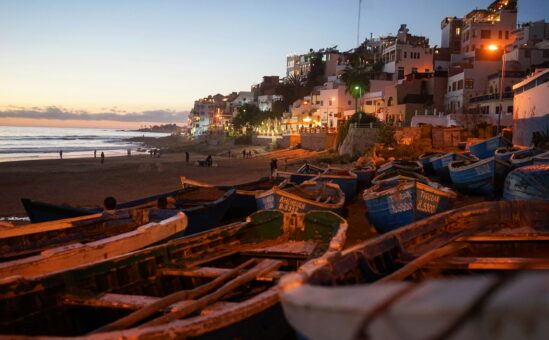
Three strings, a camel-skin face, a body carved from one piece of wood, and a bass line that has not changed in three hundred years.
Essays · May 2026 · 2 min read
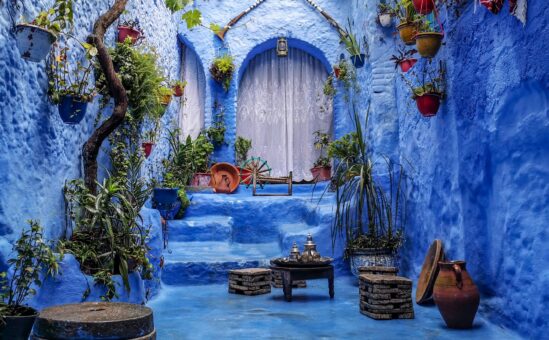
Between four in the afternoon and ten the next morning it is a different town. On staying two nights in a place designed to be seen in five hours.