

Guides · August 2026 · 2 min read
How to behave in a room where music is happening.
Ten small things that make the difference between being a guest and being an audience. None of them are about music.
Essays · April 2025 · 2 min read
Brian Jones took a tape recorder to a Rif village in 1968 and the village has been managing the consequences ever since. On what the record did and did not do.
The Master Musicians of Jajouka have been playing in the same village in the Rif for a very long time — the claim most often made is four thousand years, which is unprovable and beside the point, and the verifiable answer of several centuries is remarkable enough. What happened in 1968 is that Brian Jones arrived with a tape recorder, recorded two nights, processed the results heavily with phasing, and released them. He died before the record came out.
The album did two things at once, and they pull in opposite directions. It made the village internationally known, which brought money, invitations, festival bookings and a stream of visiting musicians from Ornette Coleman onwards. It also framed the music as a psychedelic artefact, which is not what it is, and it introduced a question of ownership that the village is still negotiating fifty years later.
There are now two groups. Both are made up of musicians from the village, both are led by men with a legitimate claim to the lineage, and both tour under names a listener would struggle to tell apart. The split is partly about money and partly about the right to the name, and it has been litigated, reported on and misreported on for three decades. People in the village will discuss it, carefully, and mostly with a visible wish to be talking about something else.
What nobody disputes is the music. The rhaita — a double-reed horn, loud in a way that has to be experienced rather than described — is played in an ensemble of eight or ten, circular-breathed so the sound never stops, over drums, for hours. It is physically overwhelming at close range. The ceremony it belongs to, Boujeloud, involves a man in goatskins and a dance that predates any of the explanations offered for it.
The thing the record could not capture, and this is not a criticism of the record, is that the music is functional. It is played for a reason, at a time, for a purpose the village agrees on. Recorded and shipped, it becomes something you put on. That transformation is not unique to Jajouka; it is what recording does. But Jajouka is the clearest case I know of a village that has had to live inside the consequences of it, in public, for fifty years.
We do not run trips to Jajouka. We have been asked to, several times. The honest reason is that we have not found a way to do it that the village has asked for rather than tolerated, and until we do, the answer stays no.
Guides · August 2026 · 2 min read
Ten small things that make the difference between being a guest and being an audience. None of them are about music.

Culture · June 2026 · 2 min read
Three strings, a camel-skin face, a body carved from one piece of wood, and a bass line that has not changed in three hundred years.
Essays · May 2026 · 2 min read
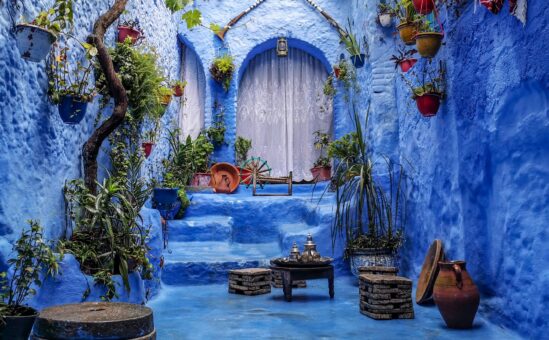
Between four in the afternoon and ten the next morning it is a different town. On staying two nights in a place designed to be seen in five hours.